
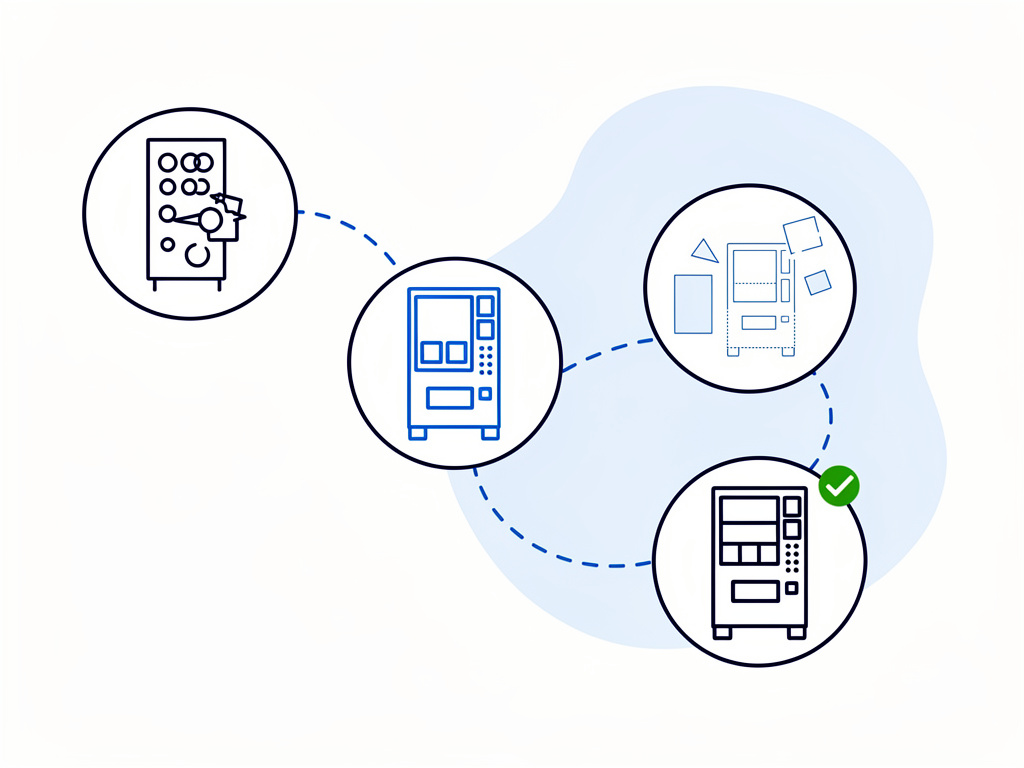
A custom vending machine looks simple from the outside: a cabinet, a screen, a slot where the product appears. Behind it sits a project that resembles any other piece of product development, with a brief, an engineering phase, prototypes, testing and a handover. Founders and brand managers who understand that sequence make better decisions, set more realistic launch dates and spend less time on rework.
Here is how a typical project moves from first idea to a working machine on site.
1. The Idea
Every project starts with a product and a reason. A food brand wants its frozen treat sold where it has no counter. An attraction wants a souvenir machine that matches its theme. A retailer wants a self-service shop front in its own colors.
The idea does not need to be polished yet. What matters is clarity on what is being sold, who is buying it and where the machine will stand. A short description, a few reference images and the product or its specifications are enough to begin.
2. Scoping
The scoping call is where the idea meets engineering reality. The builder will ask about the product's size, weight, packaging and storage needs, the expected sales pattern, the site conditions and the brand requirements.
The most important decision made here is which route the project will take. One option is to brand a proven snack, drink or treat machine, keeping the existing mechanics and changing the look, the screen and the software. The other is a new machine designed from scratch around the product. The first is faster. The second is necessary when no existing mechanism can handle the product properly.
Good scoping also surfaces constraints early: a doorway the machine must fit through, a venue's certification rules, or a payment setup the client already uses.
3. Build Plan and Quote
Before any work starts, the client should receive a build plan and a quote. The plan describes what will be built, which parts are standard and which are new, how the work will be staged, and what the client needs to supply along the way, such as artwork, product samples or screen content.
This document protects both sides. It turns a conversation into a defined scope and gives everyone a reference point if requests change. Read it as an agreement about expectations, not just a number.
4. Design and Engineering
With the scope agreed, design and engineering begin. On the outside, that means the cabinet shape, colors, logo placement, panels and integrated lighting. On the inside, it covers the robotics, dispensing mechanisms and sensors that move and verify the product, along with the electrical layout and any cooling or heating the product needs.
Software develops alongside the hardware. The ordering flow on the touchscreen, the on-screen brand content, the payment integration and the inventory tracking all need to be designed rather than bolted on at the end. A handsome machine that confuses customers at the screen will still underperform.
5. Prototyping New Mechanisms
If the project includes anything new, such as a dispensing mechanism for an unusual product, that mechanism is prototyped and tested before the full build. This is where many real problems come to light: a product that jams, a package that tips over, a compartment that will not hold its temperature.
Prototyping can feel like a delay, but it is the cheapest point in the project to fix a design. A change to a prototype affects one assembly. The same change after a series is built affects every unit in the field.
6. Build and Test
Once the design is proven, the machine is built, either as a single unit or as a series. Each unit is then tested as a complete system, with mechanics, sensors, screen, payments and remote reporting working together rather than checked in isolation.
A series also asks more of the design, since every unit must be built and serviced the same way. Fruit Riot's custom-shaped frozen-treat machine, with its large digital display and real-time inventory, is one example of a custom design produced as a series.
7. Delivery
Delivery covers more than transport. The machine has to reach its final position, be connected to power and the network, and be configured for the site. Measuring access routes, doors and elevators before shipping avoids an awkward day on site.
8. Training
The people who refill, clean and look after the machine need to know how it works. Training should cover routine refills, cleaning, reading the sales and inventory data, and dealing with simple faults. Video material helps, because staff change and newcomers need to learn the same routine.
9. Support
After launch, the relationship continues. Ask who provides technical support, how it is reached and where spare parts come from. A machine that sells without staff is only as reliable as the support behind it, so this part of the agreement deserves as much attention as the design.
What Drives Timeline and Scope
The biggest factor is the route. Branding a proven machine is faster because the mechanics, sensors and software already work. A new product adds design, prototyping and testing, and each round of testing can lead to further changes.
Other factors include:
- Product complexity: frozen, fragile or oddly shaped items need more engineering
- Software depth: a custom ordering flow or a new integration takes longer than standard screen content
- Volume: a series needs a design that is easy to repeat and maintain
- Client inputs: late artwork, missing product samples or shifting requirements slow everything down
Common Mistakes to Avoid
Designing the cabinet before the mechanism. The look is the exciting part, but the mechanism decides what is possible. Settle how the product will be stored and dispensed first.
Skipping the pilot. Ordering many units before one has been tested with real customers locks in whatever problems the first unit would have revealed.
Underestimating operations. Someone has to refill, clean and service the machine. Plan for that from the start.
Treating software as an afterthought. The screen is where customers decide whether to buy. The ordering flow and content deserve the same care as the cabinet.
Changing scope mid-build. New requests after the build plan is agreed are a frequent source of delay. Capture everything you can at the scoping stage.
Choosing Who Builds It
When you compare partners, look for a custom vending machine manufacturer that puts a build plan and quote in writing before work starts, prototypes new mechanisms before committing to production, and provides training and support after delivery. Sweet Robo, a U.S. company that designs and builds robotic vending machines, follows this sequence on custom projects that range from a cup-shaped souvenir machine for Hersheypark to themed grab machines for Imagine Exhibitions.
A custom machine is a serious build, but it is not a mysterious one. Clear inputs, a defined scope and patience during testing are what separate a project that launches on schedule from one that keeps returning to the drawing board.